
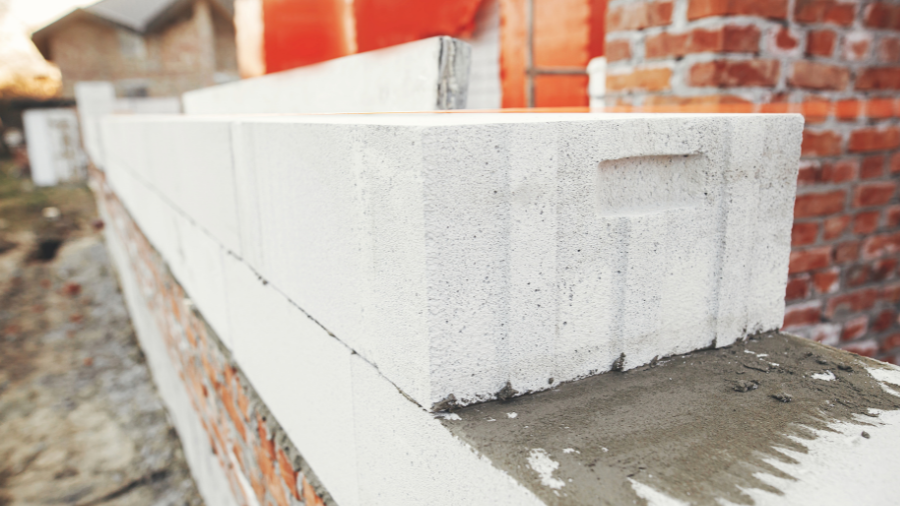
The recent closure of over 100 schools in England and Wales has highlighted concerns over the use of reinforced autoclaved aerated concrete (RAAC) in public and private buildings throughout the UK. A lightweight form of concrete, RAAC was used from the 1950s to the mid-1990s. It is weaker and less durable than standard concrete.
These problems are not new, with concerns over the structural safety of RAAC being raised as early as the 1980s and the UK Government alerting the public to the issue in the 1990s. There have been many further reports and articles highlighting the fact that a broad range of public and private buildings are potentially affected by RAAC.
In December 2018, the Department for Education (DfE) and the Local Government Association (LGA) made building owners aware of a recent building component failure in a property constructed using RAAC. In May 2019, the Standing Committee on Structural Safety (SCOSS) raised an alert to emphasise the potential risks from such construction, highlighting the failure of a RAAC panel roof construction within an operational school. This collapse was sudden with no apparent warning.
Since then, the DfE has been made aware of further sudden collapses of RAAC panels in roofs that appeared to be in good condition. In August 2023, the UK Government issued a further report providing guidance to identifying RAAC within buildings and is explicit in its relevance to not only the public sector but private sector buildings professionals.
Whilst the very public closure of these schools ahead of the new term in September 2023 has brought to the attention the concerns around public buildings, RAAC was also widely used in the private sector and the implications are equally valid to private property owners and professional advisors to the sector.
Property Insurance Considerations
Whilst insurance policies are designed to cover sudden & unforeseen damage and not construction defects or wear and tear, insurers would consider the presence of RAAC in any building as a Material Fact that must be disclosed to them. If the failure of RAAC leads to sudden damage to other parts of the building, it is possible that insurance policies may only respond to the resultant damage.
In a similar way to insurers response to cladding following the tragic Grenfell fire, we would also expect insurers to start asking more questions about the presence of RAAC as policies fall due for renewal. We have not seen this as a regular practice yet but policyholders should be prepared to answer these questions which may need the support of building surveyors or structural engineers.
At this stage, there is no uniform approach from the insurance market for dealing with buildings that contain this material, but it is likely that insurers would expect regular monitoring and checking to ensure that buildings remain safe.
With the use of RAAC broadly understood to have occurred between the 1950s and mid-1990s, the age of your building will be a useful guide on whether your property may contain this material. Any Latent Defects policies that would cover structural deficiencies are long expired.
It should also be considered that for any properties that have identified RAAC that are deemed to be unsafe, the availability of insurance cover will be restricted or in severe cases, potentially not available at all.
Professional Indemnity Insurance Considerations
We witnessed during the aftermath of the Grenfell fire disaster the challenges for professional services, with increased demand for advice from property owners and increased reliance on that advice from funders, insurers, owners and other stakeholders.
Whilst the periods during which RAAC was used will likely time bar any potential claims relating to the inclusion of this material in building projects, there is still the possibility for parties to instigate claims against professionals in the sector. It is clear that the issue with RAAC has been known for many years.
Whilst many potential claims will be timed out, the Building Safety Act 2022 prescribes a retroactive limitation period of up to 30 years for pursuing claims against parties who took on work in connection with dwellings.
Property managers could come under the spotlight if it is revealed that poor maintenance has contributed to the collapse or structural integrity of RAAC. Building surveyors who have signed off buildings as safe may also be at risk where collapses have subsequently occurred or where that advice was incorrect.
Valuers may be held responsible if they have failed to note the presence of RAAC and the property is now worth less than its original valuation.
Professionals are likely to see an increased demand for the identification of RAAC, assessing the condition of the material, regular monitoring of the condition of buildings containing such and providing risk management guidance. Insurers will likely consider this when reviewing the levels and cost of professional indemnity insurance.
Unlike the issues with cladding that have challenged the insurance industry in recent years, the likely time barring of many potential claims will have a softer impact on the insurance market than these fire safety matters but we would expect Professional Indemnity insurers to start requesting details of work in identifying, analysing and monitoring RAAC as part of their renewal questionnaires.